Showing posts with label Monitor. Show all posts

Thursday, September 5, 2013

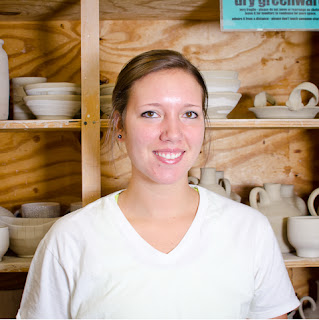
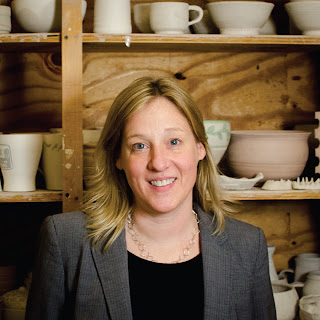
Ode to Monitors -- Melanie Weeks


1. What is your name? 
Melanie Huntington Weeks

2. When did you start coming to Lillstreet?
2007. My first class was wheel throwing with Karen Avery.

3. What brought/brings you to Lillstreet?
I had been studying at the Chicago Mosaic School, and was inspired by the owner, Karen Ami, who was creating and firing clay sculpture then covering them in mosaics.  I wanted to expand my knowledge of the craft, so I sought out a clay class, and ended up at Lillstreet!

4. What is the nature of your clay work -- functional or sculptural?
Functional, although I've recently become addicted to tile making.

5. What is your process? Do you sketch, prototype and conceptualize? etc.
I love being a student; I love the challenges set forth by each teacher I have.  I generally do not sketch, unless I'm working on a clay tile.

6. What or who influence your work?
I'm influenced by my instructors, by things in the Lillstreet gallery, by things in museums, magazines, and online resources.  I've been known to fall down the Pinterest rabbit hole looking for clay inspiration.

7. Do you work with other medium besides clay?
I studied Stained Glass for several years in the Washington, DC area before moving to Chicago (working with lead and copper foil techniques).  I work with mosaics.  I also teach different forms of art through Kidstreet and ArtReach at Lillstreet.

8. What are your duties as a monitor?
As a Kidstreet Monitor, we take care of everything from cleaning to supply replenishment (and whatever Karen asks us to do).  :-)

9. If there’s one thing you absolutely have to inform the Lillstreet clay community that would make your work easier, what would it be?
When working in the clay rooms, please don't forget to scrape/wipe down your clay table when you're done, and don't throw any food into the clay sinks.  We clean them once a week, and the food can get pretty gross after seven days.

(Editor:  This is the last post on the Monitors series.  As you may or may not have noticed, there are a few monitors missing.  Responding to the questionnaire is voluntary and there are a few that chose not to respond.  If I receive any other response after this, I will post the answers.  I hope you have enjoyed reading the series.  Please let me know what other types of posting you would like to see in the future by commenting.  Thank you!) 

Friday, August 30, 2013

Ode to Monitors -- Amber Weatherford


1.       What is your name (I may not always be able to tell by your email)?
My name is Amber Weatherford
(Editor -- Amber is also known as Amber Celadon :) )

2.       When did you start coming to Lillstreet?
I took Gary's Beginning/Beginning Advanced class for four weeks in June 2010. 

3.       What brought/brings you to Lillstreet?
I came to Lillstreet to take textile classes because I wanted to go to graduate school for textile design and hopefully one day work for Patagonia. I remembered I loved ceramics in college and kind of got stuck on the first floor. he he

4.       What is the nature of your clay work -- functional or sculptural?
My work is mostly functional but every now and then I like to make something for myself. Pelagic subject matter, big boats or whales usually. 

5.       What is your process?  Do you sketch, prototype and conceptualize? etc.
I have sketched, but normally I conceptualize.

6.       What or who influence your work?
I tend to just think of things that I would like to have and would use. I also like to look at other peoples work in the studio, gallery or internet. I hope to try new things in the future. 

7.       Do you work with other medium besides clay?
I work with lots of different mediums but nothing as consistently as clay. I am taking a few classes at Lillstreet outside of the clay department, it's fun to branch out. 

8.       What are your duties as a monitor?
I fire the kid's work in the electric kilns and I do general cleaning of the kid's rooms and some of the hand-building rooms. 

9.       If there’s one thing you absolutely have to inform the Lillstreet clay community that would make your work easier, what would it be?
One thing?, clean up after yourselves but also don't throw liquid away in the trash cans . . . i.e. half full soda cans or water bottles . . they leak garbage juice its gross.

Wednesday, August 28, 2013

Ode to Monitors -- Symerrian Sullivan


1.       What is your name (I may not always be able to tell by your email)?
Symerrian Sullivan

2.       When did you start coming to Lillstreet?
In 2004

3.       What brought/brings you to Lillstreet?
Don't laugh but, I was inspired by the movie Ghost.  When I saw Demi Moore on the wheel.  I wanted to learn how to throw.

4.       What is the nature of your clay work -- functional or sculptural?
Both

5.       What is your process?  Do you sketch, prototype and conceptualize? etc.
I'm a handbuilder.

6.       What or who influence your work?
All kinds of art, but specifically African art.  Also my friends inside and outside of Lillstreet.

7.       Do you work with other medium besides clay?
Yes, stained glass and stained glass mosiacs.  In addition to doing stained glass pieces I also put designs on tables using stained glass.

8.       What are your duties as a monitor?
I'm a part time kids monitor.  I wipe down the tables and counters in the 2 children's rooms, empty garbage, sweep up any debris that might be left behind.  Also do the same in the 2 adult handbuilding rooms.  Straighten rooms if they have been rearranged.  Make sure there is toilet paper in the women and men bathrooms, make sure there are paper towels in the dispensers. Clean assigned sink every 3 months.  wrap and box the children's ceramics once it's fired. Help with Artreach when needed.  And help with anything that Kimberly Pancoast and Karen Avery need me to help with.

9.       If there’s one thing you absolutely have to inform the Lillstreet clay community that would make your work easier, what would it be?
Please place the furniture back the way it was found after class if it has been rearranged.  And clean up extremely big messes before leaving.

Friday, August 23, 2013

Ode to Monitor -- Amanda Syler


1.    What is your name? 
Amanda Syler

2.     When did you start coming to Lillstreet? 
1994 or 95 (yeah... it's been a while)

3.    What brought/brings you to Lillstreet? 
I can't stop making stuff out of clay! And I’m kind of starting to be a kiln rat.

4.     What is the nature of your clay work -- functional or sculptural? 
99% functional. I admire the hell out of sculptors, but there's something in my background (German/Swiss type A-ness) that keeps me coming back to the wheel. I want to make everything more functional, more ergonomic. And in the process hopefully make it beautiful.

5.     What is your process? Do you sketch, prototype and conceptualize? etc.
Usually I have an idea of what i want to make when I sit down. But sometimes I’ll see something (another pot or some kind of art) that makes me think "I can totally make that" or "I can do better" OR someone says "you should make this." I usually do a quick sketch, or play with fonts on the computer until I design what I’m thinking of. Then I go to the wheel and make prototypes until I feel like I’ve got the form down. After that I might paint on slips or colored underglazes, bisk it, and maybe add an image or type transfer, and finally glaze (usually just a liner for soda firing).

6.     What or who influence your work? 
Other clay artists, graphic patterns, textures, typography, nature, architecture; modern, mid-century and rustic types of design.

7.     Do you work with other medium besides clay? 
graphic design, drawing & jewelry

8.     What are your duties as a monitor? 
I’ve been a clay maker and a regular monitor in the past. Now I’m a monitor on the soda team, so we load, fire and unload the soda kiln, and take care of it (the soda kiln needs lots of TLC). I also mix slips & glazes, answer questions (if I know the answer), teacher-assist, get clay & tools, and clean & organize of course (or whatever Karen needs me to do). And I design signs & labels for around the studio.

9.     If there’s one thing you absolutely have to inform the Lillstreet clay community that would make your work easier, what would it be?
Getting students to use best practices when wadding their work for the soda kiln. we spend a lot of time re-wadding pieces and it makes the loading process (which is already long) much longer. I’m working on doing a sheet with drawn examples that we can put up, but it will say this: make sure you're wadding your work for STABILITY on the kiln shelves, and for SUPPORT of your piece. Little tiny wads on a huge piece, placed only in the very center? Not good - your piece may warp, crack, or even fall onto someone else's. ask your soda instructor or a soda monitor if you're not sure.

Monday, August 19, 2013

Ode to Monitors -- Amy Odgers


1.       What is your name (I may not always be able to tell by your email)?
2.       When did you start coming to Lillstreet?
3.       What brought/brings you to Lillstreet?
4.       What is the nature of your clay work -- functional or sculptural?
5.       What is your process?  Do you sketch, prototype and conceptualize? etc.
6.       What or who influence your work?
7.       Do you work with other medium besides clay?
8.       What are your duties as a monitor?
9.       If there’s one thing you absolutely have to inform the Lillstreet clay community that would make your work easier, what would it be?

(Editor -- Amy chose to answer in a paragraph format to keep the readers on their toes!)


Amy Odgers

I started coming to LS in January 2009.  I am not sure what took me so long to get here...I knew about the old Lillstreet and always wanted to take a class but never got beyond thinking about it.  I finally took the plunge when a friend asked me to take a class with her.  I was a goner from day one. I have found a wonderful community here, and an endless source of inspiration.  

I do mostly functional work on the wheel but I have also done alot of hand building and also some metalsmithing projects to complement some of my ceramic pieces.  Sometimes my process is to start throwing and see what happens.  I also like to look at things and figure out if I can duplicate them.  I am working on some post caps for my deck and thinking about a replacement for my black plastic doorbell cover.  I am drawn to texture and looking for ways to get more of it into my work.  Mostly I just love playing with clay. 

I started as a claymaker this past winter.  The pugger and I had some struggles early on, but it’s getting better.  My request from the community to make my work easier...watch what you are dumping in the reclaim buckets.  Shammies and plastic are the most common offenders. among other things!  


That's it.  Thanks for your interest!   

(Editor:  The pugger is actually quite good about getting rid of any foreign objects in the  reclaimed clay).

Friday, August 16, 2013

Ode to Monitors -- Ellen Neely


Ellen Neely

1. When did you start coming to Lillstreet?
I took my first pottery class a little over three years ago.

2. What brought/brings you to Lillstreet?
The curiously great joy I get trying to make something beautiful or useful from a lump of clay.

3. What is the nature of your clay work – functional or sculptural?
Most of my work is supposed to be functional, although I have made a few covered forms with strong sculptural elements (and a few pitchers that look good, but don’t pour so well!)

4. What is your process? Do you sketch, prototype and conceptualize?
I’ve recently started sketching – I now have little notebooks filled with ideas for pots and tiles. When I’m really interested in a form, I’ll work in a series, tweaking a spout, a handle, a rim, a foot just a little until I get what I want. And sometimes, I’ll just play around with whatever appears on the wheel – some of my favorite forms have their foundations in these kinds of experiments.

5. What or who influences your work?
Everything I see influences me – the work of other potters and craftsmen and the shapes I see in buildings, objects and nature. Trips to museums and antique shops can be particularly inspiring, but sometimes it’s just a description in a novel or a photograph in an old book that helps me start a new project. And my Lillstreet classes are a huge influence – I’ve learned so much over the past three years, and I have so much more to learn!

6. Do you work with other media besides clay?
I dabble in photography for myself, for friends and for an organization with which I’m involved.

7. What are your duties as a monitor?
My main job is to hose down and wet vac the wheel rooms and glaze area overnight on weekends. 

8. If there’s one thing you absolutely have to inform the Lillstreet clay community that would make your work easier, what would it be?
It’d be great if open hours could last all day and all night, but they can’t and they don’t. When we’re doing the floors, it’s wonderful if folks leave by 10 pm – we don’t like to kick you out, but we will!

Wednesday, August 14, 2013

Ode to Monitors -- Susan McBride


1. What is your name (I may not always be able to tell by your email)?
My name is Susan Messer McBride, but I sign my pots ‘sam’ for Susan Ann Messer, my birth name.

2. When did you start coming to Lillstreet?
I started taking wheel classes at Lillstreet, back when it was located on Lill in Lincoln Park, in the winter of 1995. It was my first year teaching high school English and I took a class on the recommendation of a grad school professor who believed that effective teachers found a way to ‘stir the soul’ outside of the classroom.

3. What brought/brings you to Lillstreet?
What brought me to Lillstreet in 1995 is similar to what keeps me coming back each day: Working with clay stirs my soul and makes me feel complete. I respect the studio environment at Lill—serious yet friendly, focused yet loose.

4. What is the nature of your clay work -- functional or sculptural?
My work is functional wheel thrown porcelain.

5. What is your process? Do you sketch, prototype and conceptualize? etc.
Sometimes I see forms in pictures or magazines and I will try to replicate them. Other times it is about a shape that I want to hold in my hand for a mug, or a size for a bowl that might fill a certain need.

6. What or who influence your work?
I feel my work is influenced daily by other potters at Lill, whether I realize it or not. Influential teachers for me at Lillstreet include Patty Kochaver and Lisa Harris. 

7. Do you work with other medium besides clay?
I mess around with painting for fun, informally and at home, but am interested in taking metals and photography in the future.

8. What are your duties as a monitor?
I am one of two glaze makers who mix and monitor the glazes at Lillstreet.

9. If there’s one thing you absolutely have to inform the Lillstreet clay community that would make your work easier, what would it be?
My, our, work is made easier when people have fun, clean up after themselves and look out for others’ work in the process.


Monday, August 12, 2013

Ode to Monitors -- Laura Marmash

No photo available.  Please see website for work: http://lauramarmash.com/Home.html


1. What is your name (I may not always be able to tell by your email)?
Laura Marmash


2. When did you start coming to Lillstreet? 
2006

3. What brought/brings you to Lillstreet?
The opportunity for a personal, creative outlet.


4. What is the nature of your clay work -- functional or sculptural? 
Mainly figure sculpture, but I am currently enrolled in a soda class and revisiting the wheel.

5. What is your process? Do you sketch, prototype and conceptualize? etc.
Depends on the piece. Some figure sculptures are purely representations from live models, others are conceptualized to evoke a mood or feeling.

6. What or who influence your work?
Cristina Cordova is my favorite figure sculptor. Her works are beautiful and haunting, plus her mastery of the figure AND the medium is hugely inspiring.

7. Do you work with other medium besides clay?
I've been playing with ways to incorporate other materials with clay, such as fabric, wood and wool. The challenge for me is to make the added material feel "as one" with the clay, not just an afterthought. It's tricky to get the mix just right.

8. What are your duties as a monitor?
I am a claymaker, and am responsible for making 1000 lbs of clay each month. Making clay at Lillstreet is more art than science. You have to feel the clay for moisture content and plasticity, and add either more dry clay powder or slaked clay until the mixture is just right. 

9. If there’s one thing you absolutely have to inform the Lillstreet clay community that would make your work easier, what would it be?
Try not to allow "foreign materials" to get into the clay reclaim barrels. Especially paper towels. When scooping the slaked clay from the barrels sometimes there are pockets of black gunk that's really stinky. Very nasty stuff!

However, the occasional chamois or clay tool is like the prize in a cracker jack box. You never know what you are going to get.


Thursday, August 8, 2013

Ode to Monitors -- Chuck Borchers


1. What is your name (I may not always be able to tell by your email)?
Chuck Borchers

2. When did you start coming to Lillstreet?
I believe I came in 2009

3.What brought/brings you to Lillstreet?
I was stressed from mental health work and happens to be next two buildings from other (Lillstreet and Thresholds). I needed to find stress release and saw Lillstreet so decided to check it out. Saw the catalog and decided to pick ceramics and fell in love with it ever since.


4. What is the nature of your clay work -- functional or sculptural?
mostly functional but will be taking sculptural class this coming June.

5. What is your process? Do you sketch, prototype and conceptualize? etc.
Ah well normally I just start process once I touch clay. Sometime I read magazines or videos, or other people's work and gives me ideas of what to make.

6. What or who influence your work?
Good question. I believe was that when I go to art festivals, art museums, etc., I start to notice myself that I actually enjoy arts. Reminds me when growing up, I always doodle. So I figured why not get involved. Wish I could've done it long time ago but ah never say never!

7. Do you work with other medium besides clay?
I did took glass bead class. I would like to take more classes with vary kind of arts at Lillstreet but one thing kinda prevents me from taking it is sign language as I'll explain on #9

8. What are your duties as a monitor?
I do wet-vac in handbuilding rooms, second floor hallway, making test tiles, and occasionally clean one of the sinks.

9. If there’s one thing you absolutely have to inform the Lillstreet clay community that would make your work easier, what would it be?
Since I am deaf, ASL (American Sign Language) is my primary language and would love to have an ASL interpreter when I'm taking a class. Hiring one isn't cheapWhen I first took class with Gary Jackson as a teacher, he had an assistant who sat next to me at entire time, talking directly at me as I'm able to read lips but not always and when I don't understand him, he wrote on paper for me to read. It's good idea what Gary did but it's not satisfactory. Ok, it's kinda long to explain. Basically, I can speak and able to read lip most of the time which is hearing person's advantage. But he/she either don't realize or understand my disadvantages which are when it comes to a group of people, I'm not able to comply at all. Also I can't always read everyone what they say..some move their mouth very little or have moustache or beard cover their lips. It's very frustrating for me. Only advantage I have in class is when teacher give a demo which is fine but Ill miss out what teacher says with technical terms or such. If I have sign language interpreter present, my life will be whole lot easier and able to understand what's going on with the teacher or students when they talk.

Actually I haven't taken a class for three yrs. because I'm not comfortable taking class without an interpreter. I would take class if its one on one as long I ask for teacher's patience if I'd have trouble understanding the teacher as I'd ask to say it again repeatedly and having teacher write on pen and paper. It is just how it is with me.

Actually monitors and teachers treat me kindly and try to get me involved which I totally respect for their effort, yet it'll always be a struggle for me. Believe me, Lillstreet is a great place to enjoy the work of art and its' learning process. Just wish it would be easy access with communication between a hearing and deaf person. 

Wednesday, July 24, 2013

Ode to Monitors -- Chuck Escue


1.       What is your name (I may not always be able to tell by your email)?
Chuck Escue

2.     When did you start coming to Lillstreet?
January 2010

3.       What brought/brings you to Lillstreet?
The opportunity to work in clay, which had been an unfulfilled dream of mine since I was about six. I stay because the folks are great.

4.       What is the nature of your clay work -- functional or sculptural?
I mostly make functional work on the wheel, though I do enjoy decorative tile as well. 

5.       What is your process? Do you sketch, prototype and conceptualize? etc.
I try to respond to needs I perceive around me in what I am making. After that, my process in as minimal as I can make it, and as involved as required.

6.       What or who influence your work?
My family, my friends, and people I encounter influence what I make. Finishes are an attempt to reflect the world we live in, with it's great beauty and imperfections. 

7.       Do you work with other medium besides clay?
I do work in other mediums. Photography, carpentry, poetry, and lighting. I enjoy being able to express myself architecturally.

8.       What are your duties as a monitor?
As a monitor I help with recycling all the clay scraps we have around. Rotating barrels, empty and full. Mixing unusable scrap with dry clay to make a workable body. And stacking those thousands of pounds into neat, accessible piles.

9.       If there’s one thing you absolutely have to inform the Lillstreet clay community that would make your work easier, what would it be?
Do not, please do not, put paper towels into the clay barrels. They rot in there. Stink. And ruin the clay. Certain people actually have skin reactions to the bacteria grown that way.


Monday, July 22, 2013

Ode to Monitors -- Cassandra Deiters


1.       What is your name (I may not always be able to tell by your email)?
My name is Cassandra Deiters.

2.       When did you start coming to Lillstreet?
I started coming to Lillstreet in August 2012.

3.       What brought/brings you to Lillstreet?
I came to Lillstreet because I wanted to improve on my ceramic skills. I took a ceramic class in college and was terrible! Ha!  So, my art professor suggested Lillstreet when I moved to Chicago.

4.       What is the nature of your clay work -- functional or sculptural?
Since I am still a beginner, I've stuck with the same class, beginners wheel throwing. My work is functional, if that is what you want to call it. I think that would be more of an opinion. :o)

5.       What is your process?  Do you sketch, prototype and conceptualize? etc.
When I throw, I don't usually have a thought process. I just throw and see what happens. Haha! Still a beginner.

6.       What or who influence your work?
My inspiration is my family and friends. They ask for pieces and I do my best to make something for them that is similar to their wants and needs.

7.       Do you work with other medium besides clay?
I have previously worked and work in other mediums, my major was art. I am more experienced in drawing, printmaking, and painting.

8.       What are your duties as a monitor?
I am a Kidstreet monitor

9.       If there’s one thing you absolutely have to inform the Lillstreet clay community that would make your work easier, what would it be?
One thing that would make my work easier would be to know where the extra trash bags are stored besides the women's bathroom. It's so frustrating when I get there Wednesday mornings and all the trash bags are used up from the usual hiding spots. :)

Friday, July 19, 2013

Ode to Monitors -- Christi Chadwick


1.       What is your name (I may not always be able to tell by your email)? 
Christi Chadwick

2.     When did you start coming to Lillstreet?
About seven years ago

3.       What brought/brings you to Lillstreet?
Throwing pots

4.       What is the nature of your clay work -- functional or sculptural?Mostly functional

5.       What is your process? Do you sketch, prototype and conceptualize? etc.

(Editor: No answer)

6.       What or who influence your work?
Everyone I see up at Lillstreet

7.       Do you work with other medium besides clay?
NO

8.       What are your duties as a monitor?
Claymaker

9.       If there’s one thing you absolutely have to inform the Lillstreet clay community that would make your work easier, what would it be?
(Editor: No answer)


Wednesday, July 17, 2013

Ode to Monitors -- Steve Acoba


1.       What is your name (I may not always be able to tell by your email)?
Steve Acoba

2.       When did you start coming to Lillstreet?
I first started classes I think Fall of 2008?

3.       What brought/brings you to Lillstreet?
I took a class way back in high school for a few weeks and remember really enjoying it. I live in the neighborhood and drove past Lill Street all the time but never came in. I came for a workshop one day, really liked the vibe of the place so I signed up for a beginning wheel class. I have been coming in ever since. Wheel throwing is my way of de-stressing from my full-time of being a Realtor.

4.       What is the nature of your clay work -- functional or sculptural?
I mainly do functional work. Have been enjoying the challenge of throwing bottles lately. Patty's '100 Bottle Class' was great!

5.       What is your process?  Do you sketch, prototype and conceptualize? etc.
I like trying to replicate forms/shapes that I see in catalogs and in stores. I watch a lot of YouTube videos too on throwing techniques.

6.       What or who influence your work?
 Seeing ceramic pieces in stores and at art shows it what inspires me. I really like simple-looking, clean-lined shapes and forms. I stick with glazes that I think complement the shapes versus distracting from them. I  And again, watching throwing videos online. I've taken classes with many of the instructors and have learned so much from all of them. We are so fortunate to have such amazing artists teaching us.

7.       Do you work with other medium besides clay?
I just work with clay. I'd say porcelain and Bmix are my favorites. Although I like the Ochre stoneware too.

8.       What are your duties as a monitor?
I unload and reload the glaze and bisque kilns and clean tables/sinks on Monday nights.


9.       If there’s one thing you absolutely have to inform the Lillstreet clay community that would make your work easier, what would it be?
Whatever you take out from under the tables, always put it back when you're done.  And scrape the tables of any clay you might leave behind, wipe the shelf in front of your wheel when done too. Switch wheels off and stools up when you’re done.

Tuesday, July 16, 2013

Ode to Monitors -- Adam August

As promised -- here is the first of the series of responses for the "interviews" with monitors.  I hope you enjoy the series and please do not hesitate to leave comments or provide feedback for topics you would like to see in future posts.

1.       What is your name?
Adam August

2.       When did you start coming to Lillstreet?
November 2007 Karen Avery Wednesday morning class 

3.       What brought/brings you to Lillstreet?
For me Lillstreet is a place with endless possibilities.  A place to get messy and make as much art as you want.  Also it has a great social life as well.

4.       What is the nature of your clay work -- functional or sculptural?
Functional

5.       What is your process?  Do you sketch, prototype and conceptualize? etc.
Wheel thrown clay, sometimes altered and almost always soda-fired.

6.       What or who influence your work?
Chris Gustin is my favorite ceramic artist.  I love his forms and colors.

7.       Do you work with other medium besides clay?
I am a Motion Graphic Designer for my career.  I use digital media to create graphic design and animation for videos and live events.

8.       What are your duties as a monitor?
I am a Soda Monitor.  I am part of the team that fires the soda kiln and maintains the soda program.


9.       If there’s one thing you absolutely have to inform the Lillstreet clay community that would make your work easier, what would it be?
Learn as much as you can about soda-firing by signing up for the loading, firing and unloading of the soda kiln.  By being involved with and seeing what everyone's work looks like going in, and then seeing the work coming out, you can learn a lot about what you like and don't like, or what worked and didn't work.