Monday, July 22, 2013

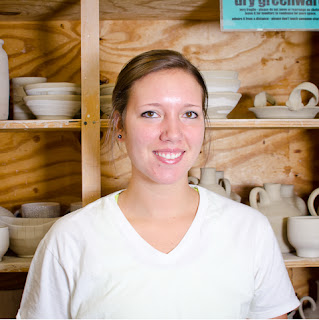
Ode to Monitors -- Cassandra Deiters


1.       What is your name (I may not always be able to tell by your email)?
My name is Cassandra Deiters.

2.       When did you start coming to Lillstreet?
I started coming to Lillstreet in August 2012.

3.       What brought/brings you to Lillstreet?
I came to Lillstreet because I wanted to improve on my ceramic skills. I took a ceramic class in college and was terrible! Ha!  So, my art professor suggested Lillstreet when I moved to Chicago.

4.       What is the nature of your clay work -- functional or sculptural?
Since I am still a beginner, I've stuck with the same class, beginners wheel throwing. My work is functional, if that is what you want to call it. I think that would be more of an opinion. :o)

5.       What is your process?  Do you sketch, prototype and conceptualize? etc.
When I throw, I don't usually have a thought process. I just throw and see what happens. Haha! Still a beginner.

6.       What or who influence your work?
My inspiration is my family and friends. They ask for pieces and I do my best to make something for them that is similar to their wants and needs.

7.       Do you work with other medium besides clay?
I have previously worked and work in other mediums, my major was art. I am more experienced in drawing, printmaking, and painting.

8.       What are your duties as a monitor?
I am a Kidstreet monitor

9.       If there’s one thing you absolutely have to inform the Lillstreet clay community that would make your work easier, what would it be?
One thing that would make my work easier would be to know where the extra trash bags are stored besides the women's bathroom. It's so frustrating when I get there Wednesday mornings and all the trash bags are used up from the usual hiding spots. :)

Friday, July 19, 2013

Ode to Monitors -- Christi Chadwick


1.       What is your name (I may not always be able to tell by your email)? 
Christi Chadwick

2.     When did you start coming to Lillstreet?
About seven years ago

3.       What brought/brings you to Lillstreet?
Throwing pots

4.       What is the nature of your clay work -- functional or sculptural?Mostly functional

5.       What is your process? Do you sketch, prototype and conceptualize? etc.

(Editor: No answer)

6.       What or who influence your work?
Everyone I see up at Lillstreet

7.       Do you work with other medium besides clay?
NO

8.       What are your duties as a monitor?
Claymaker

9.       If there’s one thing you absolutely have to inform the Lillstreet clay community that would make your work easier, what would it be?
(Editor: No answer)


Thursday, July 18, 2013

Soda Invitational

A chance to get a "taste" of Soda. If you are interested, please try to coordinate this as a class activity with your teacher as your information source. Otherwise, please consult one of the resources listed below. Have fun!


A soda fired mug


A Little Soda: Intro to Lillstreet’s Soda Program


What is Soda Firing?


Soda Firing is a form of atmospheric glazing where sodium bicarbonate (baking soda) and sodium carbonate (soda ash) are introduced into the kiln at high temperatures (2250-2300F). The soda immediately vaporizes and is carried throughout the kiln coating everything it passes with a thin layer of sodium oxide creating unique soda flashing effects.


Invitation to “Cone 10” students (prerequisite: one 10 week class) Get your free Ticket.


Students may fire one or two small pots using the guidelines below. We suggest cups/mugs, cereal bowls, or bottles. For Handbuilders, suggestions are a mug, a vase, or a very small study of a head or hand. Maximum size is 6x6 inches. Taller pieces work better than flat-no plates or tiles! This invitation expires September 2.


Get a free Ticket for each piece (maximum 2 pieces) at the Front Desk. After wadding, put your pots on designated shelves inside the Soda Kiln Room with the Ticket. Pots by soda students have space priority. Remember, soda pots can have unpredictable results! Have FUN!


Cone 10 Clay, Glazes and Soda Slips


  • On functional pieces a liner glaze is recommended on the inside of the piece because soda has a difficult time reaching the insides of pots. Cone 10 glazes that work well as liner glazes: Temoku, Red Iron, Luster Shino, Gustin Shino, Shaners White, and Tom’s Purple. (There are glazes that don’t work-please use these six glazes.) DO NOT GLAZE THE OUTSIDE; THEY WILL BE REJECTED. Pick-up is outside the Soda Kiln Room.


  • The soda will react with the bare clay body also, so it is not necessary to always cover the pot with a Soda Slip, which are in Wheel B. All Cone 10 Clay Bodies work well in Soda, and each has its own character. We recommend one piece “bare” with a liner glaze and one with a soda slip brushed on greenware. All pieces must be Bisk fired. We recommend these Soda Slips: Mustard, Smooth Orange, Rutile Slip, Blue-Green, Rougir, and Thompsons. Slips might show soda effects on one side of the piece and be dry on the other side; this is the nature of soda firing!


Wadding


Wadding must be used on all pots entering the Soda Kiln. Without wadding the soda will attach the piece to the kiln shelf.  You are wadding your work for STABILITY on the kiln shelves, and for SUPPORT of your piece! Please wad during your class and ask your teacher to help you! Found near the Spray Booth, keep the labeled Wadding bucket and plastic bag tightly closed after use. Roll small marble size balls of wadding and use Elmer’s Glue to glue them to the bottom of the pot. 3-4 is adequate for most pots. (Wadding is never allowed in the Cone 10 firings.)


Teachers can answer basic questions and the Soda Team is available to help! Consult with Fred, Adam, Amanda, Sam, or Nixon, or Karen.  

Wednesday, July 17, 2013

Ode to Monitors -- Steve Acoba


1.       What is your name (I may not always be able to tell by your email)?
Steve Acoba

2.       When did you start coming to Lillstreet?
I first started classes I think Fall of 2008?

3.       What brought/brings you to Lillstreet?
I took a class way back in high school for a few weeks and remember really enjoying it. I live in the neighborhood and drove past Lill Street all the time but never came in. I came for a workshop one day, really liked the vibe of the place so I signed up for a beginning wheel class. I have been coming in ever since. Wheel throwing is my way of de-stressing from my full-time of being a Realtor.

4.       What is the nature of your clay work -- functional or sculptural?
I mainly do functional work. Have been enjoying the challenge of throwing bottles lately. Patty's '100 Bottle Class' was great!

5.       What is your process?  Do you sketch, prototype and conceptualize? etc.
I like trying to replicate forms/shapes that I see in catalogs and in stores. I watch a lot of YouTube videos too on throwing techniques.

6.       What or who influence your work?
 Seeing ceramic pieces in stores and at art shows it what inspires me. I really like simple-looking, clean-lined shapes and forms. I stick with glazes that I think complement the shapes versus distracting from them. I  And again, watching throwing videos online. I've taken classes with many of the instructors and have learned so much from all of them. We are so fortunate to have such amazing artists teaching us.

7.       Do you work with other medium besides clay?
I just work with clay. I'd say porcelain and Bmix are my favorites. Although I like the Ochre stoneware too.

8.       What are your duties as a monitor?
I unload and reload the glaze and bisque kilns and clean tables/sinks on Monday nights.


9.       If there’s one thing you absolutely have to inform the Lillstreet clay community that would make your work easier, what would it be?
Whatever you take out from under the tables, always put it back when you're done.  And scrape the tables of any clay you might leave behind, wipe the shelf in front of your wheel when done too. Switch wheels off and stools up when you’re done.

Tuesday, July 16, 2013

Ode to Monitors -- Adam August

As promised -- here is the first of the series of responses for the "interviews" with monitors.  I hope you enjoy the series and please do not hesitate to leave comments or provide feedback for topics you would like to see in future posts.

1.       What is your name?
Adam August

2.       When did you start coming to Lillstreet?
November 2007 Karen Avery Wednesday morning class 

3.       What brought/brings you to Lillstreet?
For me Lillstreet is a place with endless possibilities.  A place to get messy and make as much art as you want.  Also it has a great social life as well.

4.       What is the nature of your clay work -- functional or sculptural?
Functional

5.       What is your process?  Do you sketch, prototype and conceptualize? etc.
Wheel thrown clay, sometimes altered and almost always soda-fired.

6.       What or who influence your work?
Chris Gustin is my favorite ceramic artist.  I love his forms and colors.

7.       Do you work with other medium besides clay?
I am a Motion Graphic Designer for my career.  I use digital media to create graphic design and animation for videos and live events.

8.       What are your duties as a monitor?
I am a Soda Monitor.  I am part of the team that fires the soda kiln and maintains the soda program.


9.       If there’s one thing you absolutely have to inform the Lillstreet clay community that would make your work easier, what would it be?
Learn as much as you can about soda-firing by signing up for the loading, firing and unloading of the soda kiln.  By being involved with and seeing what everyone's work looks like going in, and then seeing the work coming out, you can learn a lot about what you like and don't like, or what worked and didn't work. 


Wednesday, July 10, 2013

A New Series

Apologies for having been somewhat quiet.  I have been working on an idea for a new series of posts.  Lillstreet's Clay Department is the largest department at Lillstreet and the amount of chores and tasks that needed to be performed on a daily basis is not a trifling matter.  There is a whole cadre of behind the scene actors each performing their assigned duties to help the Clay Department function as a well oiled machine.  This cadre of actors are the Lillstreet Studio Monitors.  So, I've been busy "interviewing" and collating the response from the monitors and will present them for your reading pleasure over the course of the next few weeks.  The questions that I've asked them are as follows:


1.       What is your name (I may not always be able to tell by your email)?

2.       When did you start coming to Lillstreet?

3.       What brought/brings you to Lillstreet?

4.       What is the nature of your clay work -- functional or sculptural?

5.       What is your process?  Do you sketch, prototype and conceptualize? etc.

6.       What or who influence your work?

7.       Do you work with other medium besides clay?

8.       What are your duties as a monitor?

9.       If there’s one thing you absolutely have to inform the Lillstreet clay community that would make your work easier, what would it be?

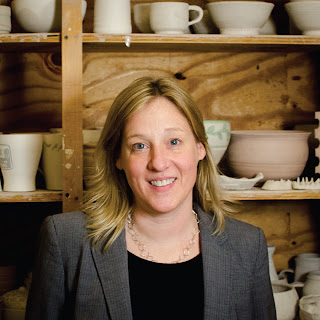
The "interview" is an email response to the above question and it is my goal that the responses you read will be true to the voice of the individual monitor.  I will limit any editing on my part so you get a true sense of the personality of the responder.  The hope of this series is so you have a greater appreciation for the monitors and the things they do at Lillstreet.  And, if you are so inclined, thank them for their hard work.  I am sure they would love to know that they are appreciated.

I hope you enjoy the postings over the next few weeks!

Monday, June 17, 2013

Price Change -- Clay

Effective 6/17/2013, the price of clay at Lillstreet will change.  Each bag of clay will cost $3 more, with the exception of Stoneware and Terra Cotta Reclaim.  This is the first increase since Year 2 in the current location and it will be 10 years come August.  Here's the breakdown:


NEW CLAY PRICES
Effective June 17, 2013

Stoneware Ticket
(Stoneware w/ Iron, Buff, Buff w/ Ochre, Low Fire Red)
$38

Stoneware and Terra Cotta Reclaim
$35
(Remains the same)

Premium Clays
(Grolleg Porcelain, B-Clay, Soda, and Soda Reclaim)
$45

As you may or may not be aware, what you pay for the clay at Lillstreet is not "just the cost of clay".  Built into the price of the clay you purchase at Lillstreet is the cost of 2 firings -- bisque and glaze.  Also the cost of all those ingredients that goes into making the glazes available for use, the wear and tear of the multiple weekly firings of the kilns as well as any repairs or maintenance of the kiln room.  Yes, the Baileys are not indestructible and will eventually have to be replaced.

Further, the cost of gas has gone up several times in the last few years (remember the shock when you see your bills in the winter months) and you all know that the Baileys run on gas.  So, all in all, the $3 increase is very reasonable considering all that it is paying for.

So, the start of the new session, go forth and be productive and, remember, all the things that your additional bags of clay will pay for.  Make sure you get the correct clay ticket though and fill it out accurately!  Happy claying!